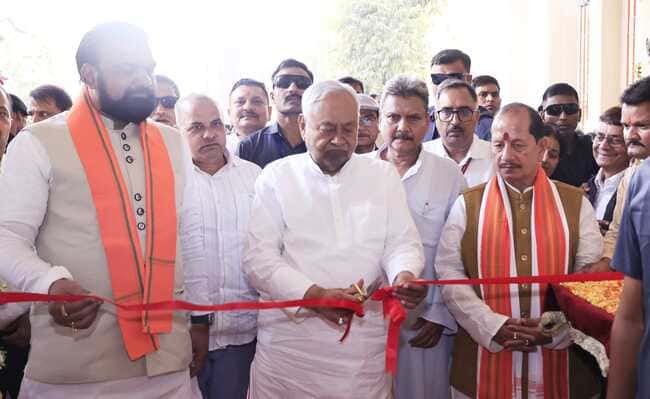
Patna, March 30 (BiharTimes): In a development that could reshape Bihar's political landscape, Chief Minister Nitish Kumar has resigned from the state Legislative Council, intensifying speculation about an imminent leadership transition in the state.
The move comes shortly after Kumar-who turned 75 on March 1-announced his decision to enter the Rajya Sabha. The back-to-back developments are being widely interpreted as a signal of his intention to step down from the Chief Minister's post, marking the possible end of an era in Bihar politics.
Kumar's resignation from the MLC has triggered discussions across political circles. While there has been no official confirmation of his resignation as Chief Minister, constitutional provisions allow him to continue in office for up to six months without being a member of the state legislature. This window is now being seen as a transitional phase for a carefully managed handover of power.
Sources close to the Janata Dal (United) leadership suggest that the decision was not abrupt but part of a long-term strategy. Over the past few months, several aides had hinted at “constitutional options” and “future planning,” which now appear to be falling into place.
With the Chief Minister's post potentially up for grabs, the focus has shifted to the next leadership within the ruling alliance. While no official successor has been named, several senior leaders within JD(U) and its allies are being discussed in political circles.
The transition, if it happens, will be closely watched not just within Bihar but nationally, given Kumar's stature as a seasoned leader who has been at the helm of the state for much of the past two decades.
Nitish Kumar's tenure has been marked by a mix of governance reforms, infrastructure development, and social welfare initiatives. His political journey—characterized by strategic alliances and ideological shifts—has made him one of the most influential regional leaders in India.
His possible exit from the Chief Minister's post would mark a significant generational shift in Bihar politics, raising questions about continuity, governance priorities, and political stability in the state.
As Bihar enters a phase of political uncertainty, all eyes are on the next few weeks. Whether Kumar formally steps down soon or uses the constitutional six-month window to oversee the transition, one thing is clear: the countdown to a new political chapter in Bihar has begun.
Further announcements from the government and ruling alliance are expected shortly, which will likely bring clarity to the succession plan and the future direction of the state.

