Shahabuddin got life sentence, but the mother of one of his victims want death sentence for him. The Rashtriya Janata Dal MP got this punishment on May 8 for the abduction and subsequent disappearance of Chotelal Gupta, a CPI ML activist. The lady who wants his execution is Kaushlaya Devi, whose son, Chandrashekar, was allegedly eliminated by his henchmen more than a decade back in Siwan. He too was the leader of the All India Students’ Association (AISA) in Jawaharlal Nehru University (JNU). AISA is the students’ wing of the CPI ML, out and out a secular organization, which always opposed the communal forces in the country.
It is Sheetal Paswan, the witness in the Chotelal Gupta case and a party activist, who fearlessly stuck to his stand and never changed his version before the court. Thus the so-called terror of Siwan fell to the CPI ML, a relatively weak outfit in the state, and not to any other political party. At times several other parties tried to woo this RJD MP, but his political compulsion did not allow him to go elsewhere.
This is not the only irony with the name Shahabuddin. Three decades back a similar sounding name, Syed Shahabuddin, had resigned from the Indian Foreign Service (he was second topper in the 1958 batch of Civil Service examination). It is said that the then foreign minister, Atal Bihari Vajpayee, was eager to promote the Shahabuddin of the previous generation. However, after the disintegration of the Janata Party in 1980 and subsequent Ram Janambhoomi movement in late 1980s the two were on the opposite sides of the fence.
Syed Shahabuddin did try to emerge as a Muslim leader. Being a prolific writer he wielded his pen well. He did manage to win from Kishanganj parliamentary seat and entered the Lok Sabha.
On the western end of the state, that is, in Siwan, another young man, called Mohammad Shahabuddin won from Ziradei assembly seat in 1990 as an independent candidate. He too tried to grab the Muslim leadership. But for that he tried to wield his gun. Where Syed Shahabuddin failed Mohammad Shahabuddin tried to fill the vacuum, but without any success.
Before qualifying for the civil service Syed Shahabuddin was close to Left movement. Mohammad Shahabuddin, on the other hand, chose to combat and wipe out the Communists. He stood for the feudal forces cutting across the religious-line. Even in the violence which took place in the jail after the pronouncement of judgement on May 8 his supporters, led by Satyendra Tiwary, clashed with the other groups of inmates led by Garbhu Gosain.
Yet for a section of Muslim youths, especially of Siwan, the district which sends maximum number of workers to Gulf countries, Mohammad Shahabuddin was an upcoming leader of the community, though he never played any role outside his district. Therefore, when police action took place in mid-March 2001 and in which 11 of his supporters were killed not a single Muslim outside Siwan came out to the street to protest or stage sit-in for him. Yet a section of media too tried to project him as the leader of the community in the state.
Perhaps they failed to realize that how can he emerge as a leader when Syed Shahabuddin, failed disastrously. But for some youths––cutting across the religion line––of his home district, Siwan, Shahabuddin did try to project a Robin Hood type image.
Just before the emergence of Mohammad Shahabuddin from the land of the first President Rajendra Prasad––he was from Ziradei––a young boy named, Amir Subhani, topped in the Civil Service examination in the late 1980s. For a few years he remained a model for the local youths and many of them wanted to imitate him. Mohammad Shahabuddin upset that apple cart in 1990s. Now a section of them wanted to become hero.
But in the 21st century the Muslims of the district are at the crossroads. They failed to understand as to why this man took up gun for the feudal right winger forces against the CPI ML, the party which stood for Muslims so solidly.


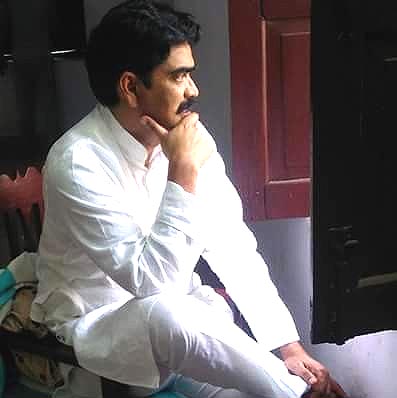 Shahabuddin got life sentence, but the mother of one of his victims want death sentence for him. The Rashtriya Janata Dal MP got this punishment on May 8 for the abduction and subsequent disappearance of Chotelal Gupta, a CPI ML activist. The lady who wants his execution is Kaushlaya Devi, whose son, Chandrashekar, was allegedly eliminated by his henchmen more than a decade back in Siwan. He too was the leader of the All India Students’ Association (AISA) in Jawaharlal Nehru University (JNU). AISA is the students’ wing of the CPI ML, out and out a secular organization, which always opposed the communal forces in the country.